Recette en Anglais

Civet zouritte (EN)

Zourite is a tenderly cooked small octopus, slowly braised with a flavorful spice mix of pepper, nutmeg, cloves, and ginger, enhanced with fresh tomatoes, red wine, and herbs.
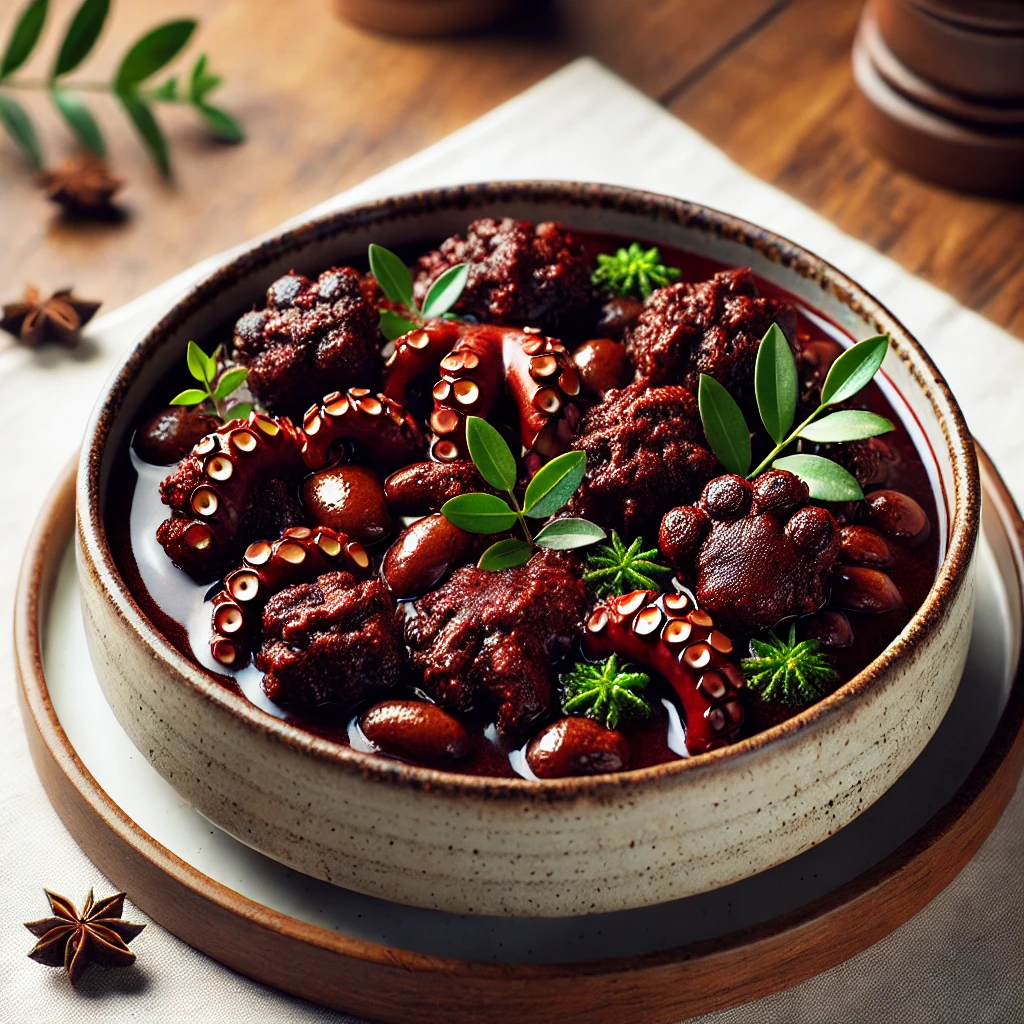
Civet Zourite

Ingredients (4 people):

  • 1 kg Zourite (small octopus)
  • Oil (a dash)
  • 1 large onion
  • 2 garlic cloves
  • 5 cm ginger
  • 1 can of diced tomatoes
  • 40 cl red wine
  • 2 spring onions, finely chopped
  • Fresh parsley
  • 2 sprigs of thyme
  • 1410 calories

Preparation:

The total time required is 1 hour.

First, the octopus needs to be tenderized. This can be done in one of two ways: either cook it in a pressure cooker or briefly blanch it in boiling water. Once the skin changes color, you can remove the octopus and peel off the skin.

For seasoning, crush green or black peppercorns (your choice), garlic, grated nutmeg, and cloves together in a mortar. If available, you can also add mace (the outer covering of the nutmeg). To deepen the flavor, you may add bay leaves or a blend of various spices.

Next, cook the octopus slowly over low heat in a stew pot without adding any liquid or salt initially. Then, add finely chopped onions, some grated ginger, garlic, and chopped tomatoes.

After about 30 to 40 minutes, once the flavors have blended well, pour in a little red wine. Let everything simmer until the wine has completely evaporated.

Finally, before serving, sprinkle finely chopped green onions and parsley over the dish.


Utensils:

  • cocotte
  • wooden spoon
  • knives
  • pestle
Rezept auf Deutsch

Civet zourite (DE)

Zourite ist ein zart gegarter kleiner Oktopus, der mit einer aromatischen Gewürzmischung aus Pfeffer, Muskatnuss, Nelken und Ingwer langsam geschmort und mit frischen Tomaten, Rotwein und Kräutern verfeinert wird.

Civet Zourite

Zutaten (6 Personen):

  • Zourite (kleiner Oktopus)
  • Wasser (wenn Sie die Kochmethode verwenden)
  • Grüner oder schwarzer Pfeffer (nach Belieben)
  • Knoblauch
  • Geriebene Muskatnuss
  • Gewürznelke
  • Muskatblüte (optional)
  • Lorbeerblätter (optional)
  • Ravensare-Blätter oder Vier-Gewürze-Mischung (optional)
  • Öl (ein Schuss)
  • In Scheiben geschnittene Zwiebeln
  • geriebener Ingwer
  • Zusätzlicher Knoblauch
  • Tomaten
  • Rotwein
  • Grüne Zwiebeln, fein gehackt
  • Petersilie
  • Zubereitung und Kochen von Zourite (kleiner Oktopus).
  • 1410 Kalorien

Zubereitung:

Gesamtzeit: 1 Stunde 15 Minuten

Als erstes muss man das Fleisch zart machen. Um das zu erreichen, kann man ihn auf zwei Arten vorkochen. Entweder im Schnellkochtopf garen oder kurz in kochendes Wasser tauchen. Sobald sich die Farbe der Haut ändert, kann man den Zourite herausnehmen und die Haut abziehen.

Für das Würzen werden grüne oder schwarze Pfefferkörner (nach Wahl), Knoblauch, geriebene Muskatnuss und Nelken in einem Mörser zusammen zerstoßen. Falls verfügbar, kann man auch Macis (die Hülle der Muskatnuss) dazugeben. Um das Aroma zu intensivieren, kann man noch Lorbeerblätter oder eine Mischung aus verschiedenen Gewürzen hinzufügen.

Anschließend wird der Zourite langsam bei niedriger Hitze in einem Schmortopf gegart, ohne anfangs Flüssigkeit oder Salz hinzuzufügen. Dann werden feingeschnittene Zwiebeln, etwas geriebener Ingwer, Knoblauch und kleingeschnittene Tomaten dazugegeben.

Nach etwa 30 bis 40 Minuten, wenn das Aroma gut durchgezogen ist, wird ein wenig Rotwein hinzugefügt. Man lässt alles köcheln, bis der Wein vollständig verdampft ist.

Streuen Sie vor dem Servieren fein gehackte Frühlingszwiebeln und Petersilie über das Gericht.

Utensilien:

  • Schmortopf
  • Holzlöffel
  • Messer
  • Mörser
Rezept auf Deutsch

Civet canard (DE)

Civet canard ist ein geschmacksintensiver französischer Enteneintopf, bei dem in Rotwein marinierte Entenstücke mit Gewürzen geschmort und in einer cremigen Soße serviert werden.

Civet Canard

Zutaten (6 Personen) :

  • 2 kg schwere Ente
  • 1 ½ Flasche Rotwein
  • 4 Zwiebeln
  • 6 Knoblauchzehen
  • 1 Stück Ingwer
  • 6 Nelken
  • 1 Bund Thymian
  • Öl, Salz, Pfeffer
  • 1 Bund Petersilie
  • Frühlingszwiebel
  • pro 100 g / 100 ml : 502 kj (120 kcal)

Zubereitung :

Insgesamter Zeitaufwand : 2 Stunden

Vorbereitung : 30 Minuten

Kochen : 1 ½ Stunden

Schritt 1 (Am Vortag) :
Die Entenstücke am besten über Nacht in einer Marinade aus Wein und Gewürzen ziehen lassen. Dafür Knoblauch, Ingwer, Salz, Pfeffer und Nelken zermahlen und mit Zwiebeln und Thymian vermengen. Alles in den Kühlschrank stellen, damit der Geschmack am nächsten Tag besonders intensiv wird.

Schritt 2 (Am nächsten Tag) :
Die Entenstücke aus der Marinade nehmen und abtropfen lassen, den Wein und die Gewürze (Zwiebeln, Knoblauch, Ingwer, Nelken etc.) aufbewahren. Frühlingszwiebeln und Petersilie fein hacken. In sehr heißem Öl die Entenstücke anbraten, bis sie schön gebräunt sind. Dann die Gewürze hinzufügen und kurz mitbraten. Den Thymian dazugeben und den Wein nach und nach dazu geben. Alles eine Stunde lang bei schwacher Hitze köcheln lassen.

Zum Schluss die Frühlingszwiebeln und die Petersilie unterrühren. Die Soße sollte am Ende cremig und reichhaltig sein.

Tipp :

Die Soße des Civet Canard ist besonders intensiv und kräftig im Geschmack. Der mit Nelken gewürzte Enteneintopf schmeckt ausgezeichnet zu weißem Reis und Getreide. Wer möchte, kann Tomaten hinzufügen.

Utensilien :

  • Sieb
  • Messer
  • Ein Schneidebrett
  • Kochtopf
  • Löffel
  • Schüssel

Recette en Anglais

Civet canard (EN)

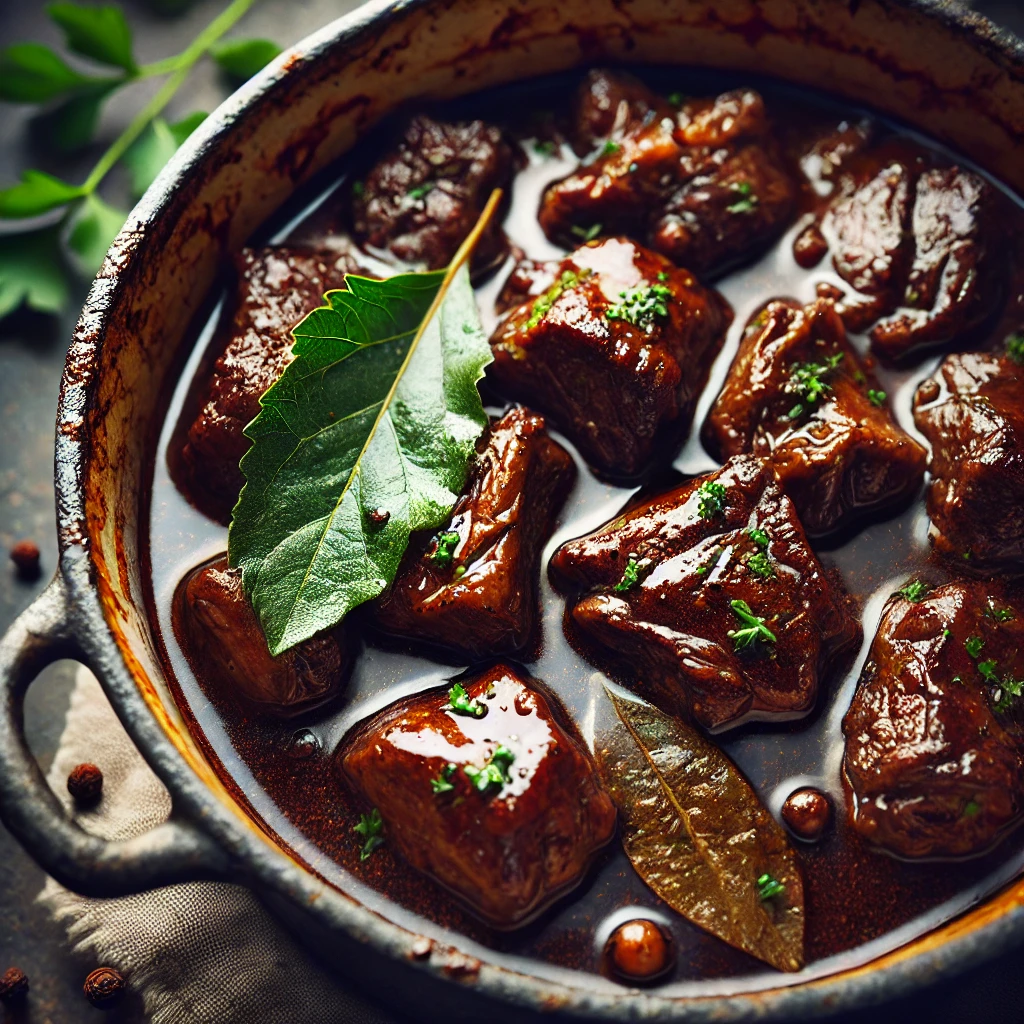
Civet canard is a flavorful French duck stew where duck pieces are marinated in red wine, cooked with spices and served in a rich, creamy sauce.

Civet Canard

Ingredients ( 6 persons ) :

  • 2 kg duck
  • 1 ½ bottle of red wine
  • 4 onions
  • 6 gloves of garlic
  • 1 piece of ginger
  • 6 cloves
  • 1 bunch of thyme
  • Oil, salt, pepper
  • 1 bunch of parsley
  • Green onions
  • Per 100 g / 100 ml : 502 kj (120 kcal )

Preparation :

Total time : 2 hours

Preparation : 30 minutes

Cooking : 1 ½ hour

Step 1 (Day before) :

The best is to let the duck pieces marinate overnight with the spices and wine (crush the garlic, ginger, salt, pepper, cloves) add the onions, thyme). Put the preparation in the fridge, the next day, the taste will be excellent!

Step 2 (Day after) :

Drain the duck pieces and keep the wine and spices (onions, garlic, ginger, cloves, etc.) Finely chop green onions and parsley In very hot oil, brown the drained duck pieces Once the duck pieces are nicely browned, add and brown the spices. Add the thyme, gradually moisten with the wine. Leave to simmer for an hour over low heat. When cooked, add the green onions and parsley. At the end of cooking you should have a creamy sauce.

Tip :

The sauce of the duck stew is more copious, the taste is more pronounced. The duck stew flavored with cloves is tasty and is enjoyed with white rice and grains You can or can’t put tomatoes in a stew, depending on your tastes.

Utensils :

  • Colander
  • Knife
  • A cutting board
  • Pot
  • Spoon
  • Bowl
Recette en Français

Civet canard (FR)

La sauce du civet canard est plus copieuse , le goût est plus prononcé . Le civet canard parfumé aux clous de girofle est savoureux et se déguste accompagné de riz blanc et de grains .

Civet Canard

Ingrédients ( 6 personnes ) :

  • 2 kg canard
  • 1 ½ bouteille de vin rouge
  • 4 oignons
  • 6 gousse d’ail
  • 1 morceau de gingembre
  • 6 clous de girofle
  • 1 bouquet de persil
  • Oignons verts
  • pour 100 g / 100 ml : 120 kcal

Préparation :

Temps total : 2 heures

Préparation : 30 minutes

Cuisson : 1 ½ heures

Etape 1 (Veille) :

Le mieux est de laisser les morceaux de canard mariner toute la nuit avec les épices et le vin (pilez l’ail, le gingembre, le sel, le poivre, le girofle) ajouter les oignons, le thym). Mettre la préparation au frais, le lendemain, le goût sera excellent!

Etape 2 (Lendemain) :

Egoutter les morceaux de canard et conservez le vin et les épices (oignons, ail, gingembre, girofle…) Hacher finement oignons verts et persil Dans l’huile très chaude, faire revenir les morceaux de canard égoutté Une fois les morceaux de canard bien dorés, ajouter et faire revenir les épices Ajouter le thym, mouiller progressivement avec le vin. Laisser mijoter une heure à feu doux Lorsque c’est cuit, ajouter les oignons verts et le persil. En fin de cuisson vous devez avoir une sauce onctueuse.

Conseil :

La sauce du civet canard est plus copieuse, le goût est plus prononcé. Le civet canard parfumé aux clous de girofle est savoureux et se déguste accompagné de riz blanc et de grains On peut ou pas mettre de tomate dans un civet, selon les goûts de chacun.

Ustensiles :

  • Passoire
  • Couteau
  • Une planche a découpé
  • Marmite
  • Cuillère
  • Bol
Recette en Français

Cabri Massalé (FR)

Le Cabri Massalé Réunionnais est un plat emblématique de la cuisine réunionnaise. Il tire ses origines de l’Inde, apporté par les travailleurs indiens engagés sur l’île à la fin de l’esclavage. Le terme „cabri“ désigne la viande de cabri (ou chèvre), mais peut aussi faire référence à du chevreau et le terme „massalé“ est dérivé du mot tamoul „masala“, signifiant mélange d’épices.

Cabris Massalé

Ingrédients (4 personnes) :

  • 1 kg de viande de cabri
  • 3 oignons
  • 3 gousses d’ail
  • 3 tomates
  • 1 petite racine de gingembre (ou en poudre)
  • 1 dizaine de feuilles de caloupilé
  • 1 branche de thym
  • 1 cuillerée à café de curcuma
  • 1 cuillerée à soupe de massalé
  • 3 cuillerées à soupe d’huile
  • Sel, poivre, persil
  • Accompagnement de riz ou de pommes de terre
  • Pour 100 g / 100 ml: 187 kcal

Préparation :

Temps nécessaire: 45 minutes.

  1. Préparation de votre ingrédient principal: la viande de cabri
    Découper la viande de cabri en morceaux de taille moyenne.
  2. Éplucher l’oignon, l’ail et le gingembre. Émincer l’oignon.
    Ensuite, piler l’ail et le gingembre jusqu’à obtenir une pâte.
  3. Concasser les tomates.
    Pour plus de simplicité, n’hésitez pas à vous fournir des tomates déjà
    concassées.
  4. Dans une cocotte, faire revenir les morceaux de cabri dans l’huile,
    jusqu’à coloration.
    N’hésitez pas à remuer constamment pour une cuisson bien homogène.
  5. Ajouter l’oignon, la pâte d’ail et de gingembre, la branche de thym et les feuilles de caloupilé.
  6. Couvrir et laisser cuire à feu doux une dizaine de minutes
    Ajouter les tomates et poursuivre la cuisson à feu moyen 5 minutes.
  7. Ajouter le massalé, le curcuma, le sel et le poivre.
    Pour les doses, n’hésitez pas à en mettre plus ou moins selon vos goûts et
    ceux de vos convives.
  8. Terminer la cuisson du Cabri Massalé
    Bien mélanger, tourner pendant 5 minutes. Mouiller à hauteur avec de l’eau
    et laisser mijoter à feu doux pendant 45 minutes.

Ustensiles:

  • Planche à découper
  • couteau
  • Mortier et pilon ou mixeur
  • Marmite en fonte ou cocotte
  • Cuillère en bois
  • Bol ou saladier pour mariner
  • Passoire
  • Cuillères pour doser
Recette en Anglais

Cabri Massalé (EN)

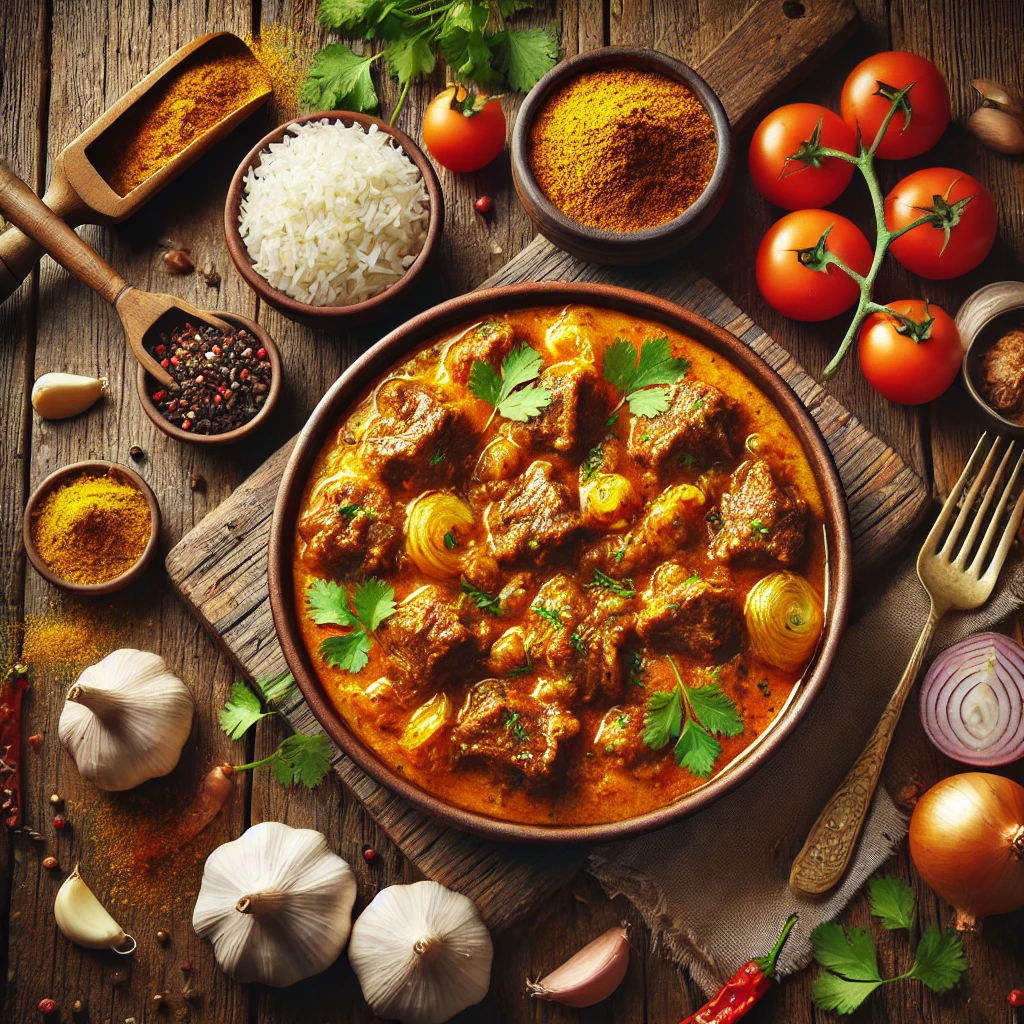
The Réunionese Cabri Massalé is an iconic dish of Réunion cuisine. It has its origins in India, brought by Indian laborers who came to the island after the abolition of slavery. The term „cabri“ refers to goat meat, though it can also mean kid (young goat), and the term „massalé“ is derived from the Tamil word „masala,“ meaning a blend of spices.

Cabris Massalé

Ingredients (4 people):

  • 1 kg of goat meat
  • 3 onions
  • 3 cloves of garlic
  • 3 tomatoes
  • 1 small root of ginger (or powder)
  • 10 caloupilé leaves
  • 1 sprig of thyme
  • 1 teaspoon of turmeric
  • 1 tablespoon of massalé
  • 3 tablespoons of oil
  • Salt, pepper, parsley
  • Served with rice or potatoes
  • For 100 g / 100 ml: 187 kcal

Preparation:

Time needed: 45 minutes.

1. Preparation of your main ingredient: goat meat Cut the goat meat into medium-sized pieces.

2. Peel the onion, garlic and ginger. Slice the onion. Then, crush the garlic and ginger until you get a paste.

3. Crush the tomatoes. For simplicity, do not hesitate to get already crushed tomatoes.

4. In a casserole dish, brown the pieces of kid in the oil, until browned. Do not hesitate to stir constantly for even cooking.

5. Add the onion, the garlic and ginger paste, the sprig of thyme and the caloupilé leaves.

6. Cover and cook over low heat for about ten minutes Add the tomatoes and continue cooking over medium heat for 5 minutes

7. Add the massalé, turmeric, salt and pepper. For the doses, do not hesitate to add more or less according to your tastes andthose of your guests.

8. Finish cooking the Cabri Massalé Mix well, stir for 5 minutes. Moisten with water and simmer over low heat for 45 minutes.

Utensils:

  • Cutting board
  • Knife
  • Mortar and pestle or blender
  • Cast iron pot or Dutch oven
  • Wooden spoon
  • Bowl for marinating
  • Strainer
  • Measuring spoons
Rezept auf Deutsch

Cabri Massalé (DE)

Das Réunioner Cabri Massalé ist ein emblematisches Gericht der Küche von Réunion. Es stammt ursprünglich aus Indien und wurde von indischen Arbeitern auf die Insel gebracht, die nach der Abschaffung der Sklaverei kamen. Der Begriff „cabri“ bezeichnet Ziegenfleisch, kann aber auch für Zicklein stehen, und der Begriff „massalé“ leitet sich vom tamilischen Wort „masala“ ab, was Gewürzmischung bedeutet.

Cabris Massalé

Zutaten (4 Personen) :

  • 1 kg Ziegenfleisch
  • 3 Zwiebeln
  • 3 Knoblauchzehen
  • 3 Tomaten
  • 1 kleine Ingwerwurzel (oder Pulver)
  • 1 Thymianzweig
  • 1 Teelöffel Kurkuma
  • 1 Esslöffel Massalé (Gewürzmischung)
  • 3 Esslöffel Öl
  • Salz, Pfeffer, Petersilie
  • Serviert mit Reis oder Kartoffeln
  • Pro 100 g / 100 ml : 187 kcal

Zubereitung :

Insgesamter Zeitaufwand : 45 Minuten

1. Das Ziegenfleisch in mittelgroße Stücke schneiden.

2. Schälen Sie anschließend die Zwiebel, den Knoblauch und den Ingwer. Hacken Sie die Zwiebel fein und zermahlen Sie den Knoblauch sowie den Ingwer, bis eine Paste entsteht.

3. Wenn Sie frische Tomaten verwenden, zerdrücken Sie diese ebenfalls. Alternativ können Sie auch bereits zerkleinerte Tomaten verwenden.

4. Erhitzen Sie etwas Öl in einer Pfanne und braten Sie die Ziegenfleischstücke darin an, bis sie braun sind. Rühren Sie dabei ständig um, um ein Anbrennen zu verhindern.

5. Fügen Sie nun die Zwiebel, die Knoblauch-Ingwer-Paste und einen Thymianzweig hinzu. Decken Sie das Ganze ab und lassen Sie es bei niedriger Hitze etwa zehn Minuten köcheln.

6. Geben Sie nun die zerdrückten Tomaten dazu und lassen Sie alles fünf Minuten bei mittlerer Hitze kochen.

7. Würzen Sie das Ganze mit Massalé, Kurkuma, Salz und Pfeffer. Passen Sie die Menge der Gewürze nach Ihrem Geschmack an. Mischen Sie alles gut durch und lassen Sie es für etwa fünf Minuten weiterköcheln.

8. Gießen Sie nun so viel Wasser dazu, dass das Fleisch gerade bedeckt ist, und lassen Sie das Gericht bei schwacher Hitze für etwa 45 Minuten köcheln, bis das Ziegenfleisch zart und gut durchgezogen ist. So haben Sie eine schöne, geschmackvolle Mahlzeit, die sich wunderbar durch die Kombination der Aromen entfaltet!

Utensilien :

  • Schneidebrett und Messer
  • Mörser und Stößel oder Mixer
  • Gusseisentopf oder Schmortopf
  • Holzlöffel
  • Schüssel zum Marinieren
  • Sieb
  • Messlöffel
Recette en Anglais

Carry Espadon (EN)

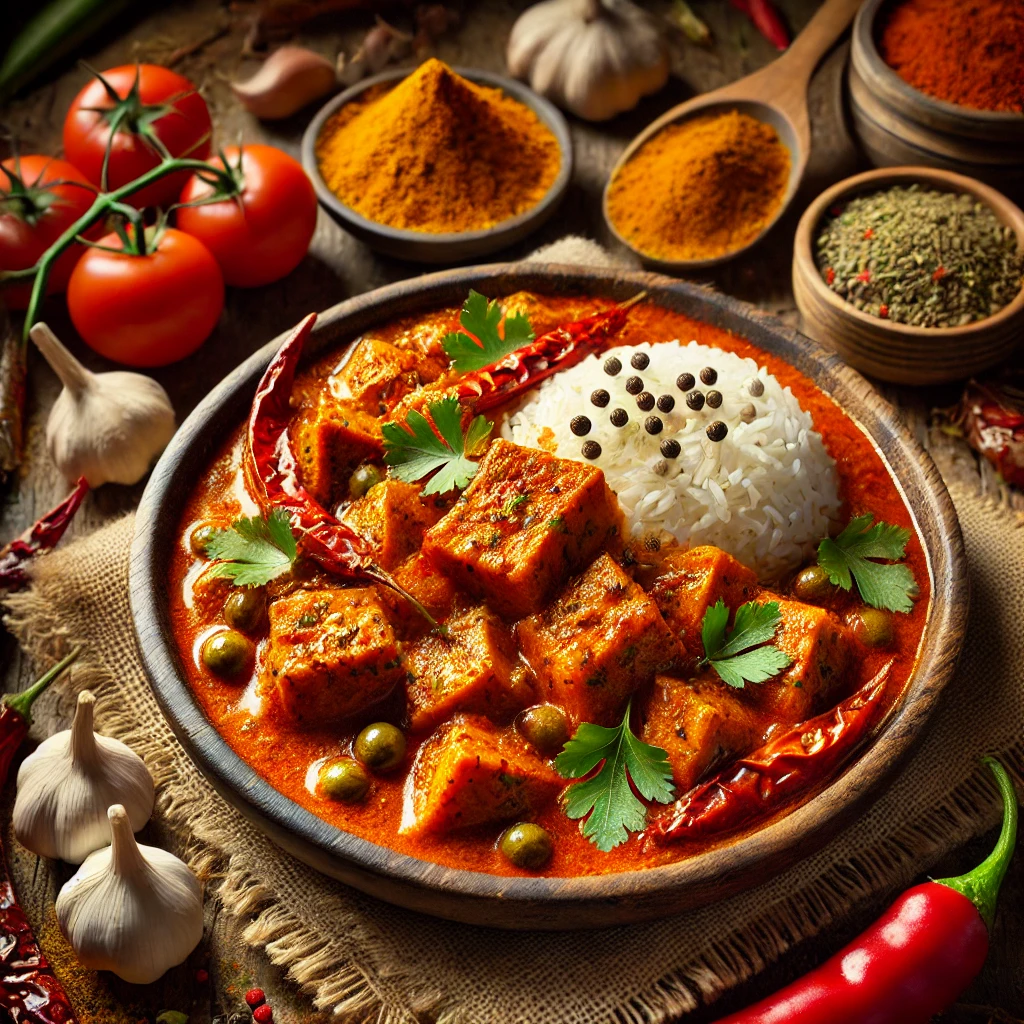
Cary Espadon is a typical Creole dish made with swordfish fish, prepared in a spicy and fragrant sauce. It combines the rich flavors of the fish with Creole spices like curry, turmeric, cumin, and chili pepper, as well as ingredients like garlic, onion, ginger, and tomatoes.

Carry Espadon

Ingredients (6 persons) :

  • 1 piece of ginger
  • 3 tablespoons of sunflower oil
  • 1 teaspoon of turmeric
  • 2 tomatoes
  • 1kg of swordfish
  • 1 clove of garlic
  • 2 onions
  • Basmati rice

Steps of the preparation

Total: 1h30 / Cooking: 1h

Before starting to cook, gather all necessary ingredients. Cut the swordfish into regular pieces and place them in a bowl. Thinly slice the onions and tomatoes, grate the garlic and ginger, and set aside spices like turmeric, chili, and thyme. Preparing the ingredients ahead of time ensures a smoother cooking process, allowing everything to be added quickly and avoiding any ingredients from burning or overcooking.

In a pot or large saucepan, heat a bit of oil and add the sliced onions, grated garlic, and ginger. Sauté them until golden brown, which will release the base flavors of the curry. Then, add the spices like turmeric and thyme, followed by the tomatoes, letting them simmer until they break down into a smooth sauce. This step is crucial for giving the curry its depth of flavor.

Once the sauce is smooth and well-blended, add the swordfish pieces to the pot. Gently stir to coat the fish in the sauce, and let it cook for a few minutes over medium heat. The fish doesn’t require long cooking, so keep an eye on it to prevent it from drying out. Adjust the seasoning by adding salt and, if desired, a bit of chili for extra heat. Once the curry is ready, serve it hot, accompanied by rice and legumes.

Ustensils

  • 1. Knife
  • 2. Casserole
  • 3. A wooden spoon
  • 4. A bowl or plate
  • 5. A grater
Recette en Français

Carry Espadon (FR)

Le Cary Espadon est un plat créole typique à base de poisson espadon, préparé dans une sauce épicée et parfumée. Il combine les saveurs riches du poisson avec des épices créoles comme le curry, le curcuma, le cumin, et le piment, ainsi que des ingrédients comme l’ail, l’oignon, le gingembre, et les tomates.

Carry Espadon

Ingrédients (6 personnes):

  • 1 morceau de gingembre
  • 3 cuillères à soupe d’huile de tournesol
  • 1 cuillère à café de curcuma
  • 2 tomates
  • 1 kg d’espadon
  • 1 gousse d’ail
  • 2 oignons
  • Riz

Préparation

Temps de préparation : 1h30 / Cuisson : 1h

Avant de commencer la cuisson, rassemblez tous les ingrédients nécessaires. Découpez l’espadon en morceaux réguliers et placez-les dans un bol. Émincez les oignons et les tomates, râpez l’ail et le gingembre, et mettez de côté les épices comme le curcuma, le piment, et le thym. La préparation en amont des ingrédients permet de rendre la cuisson plus fluide, et d’assurer que tous les éléments sont prêts pour être ajoutés rapidement, évitant ainsi de brûler ou de surcuire certains composants du plat.

Dans une marmite ou un faitout, faites chauffer un filet d’huile et ajoutez les oignons émincés, l’ail et le gingembre râpés. Faites-les revenir jusqu’à ce qu’ils soient bien dorés, ce qui va libérer les arômes de base du carry. Ajoutez ensuite les épices comme le curcuma et le thym, puis incorporez les tomates et laissez mijoter jusqu’à ce qu’elles se décomposent pour former une sauce onctueuse. Cette étape est cruciale pour donner au carry toute sa profondeur de saveur.

Une fois la sauce bien homogène, ajoutez les morceaux d’espadon dans la marmite. Mélangez délicatement pour enrober le poisson de la sauce et laissez cuire quelques minutes à feu moyen. Le poisson ne nécessite pas une longue cuisson, alors surveillez-le pour éviter qu’il ne se dessèche. Rectifiez l’assaisonnement en ajoutant du sel et, selon votre goût, un peu de piment. Une fois le carry prêt, servez-le chaud, accompagné de riz et de grains.

Ustensiles :

  • Couteau
  • Marmite
  • Cuillère en bois
  • Bol ou assiette
  • Râpe